
Fast-growing teams face a hiring paradox. The pace of growth demands that roles be filled quickly, but speed in hiring is one of the most reliable predictors of poor hiring outcomes. The shortcut taken in the screening stage surfaces as a mis-hire six months later. The panel interview that was scheduled too late in the process loses a strong candidate to a competitor who moved faster. The offer approval that sat in someone’s inbox for three days is the reason the role that was open for two months is now open again. None of these failures are caused by bad judgment. They are caused by a hiring process that was not designed to be fast and thorough simultaneously. The organizations that consistently hire well at speed have solved this by treating their recruiting workflow as an operational system with the same design discipline they would apply to any other business-critical process. That design starts with project management tools that keep every stage of the pipeline moving without losing the candidate quality that makes the hire worth making.
Lark all-in-one superapp
Structured candidate intake from the first application with Lark Forms
The first failure point in most hiring processes is the application stage. Candidate information arrives in inconsistent formats through multiple channels: some through a careers page, some through LinkedIn, some through a recruiter, some through an employee referral that arrives as a forwarded email. The recruiter who has to consolidate this information into a usable pipeline record before they can begin screening is spending time on data management that should be happening automatically.
Lark Forms
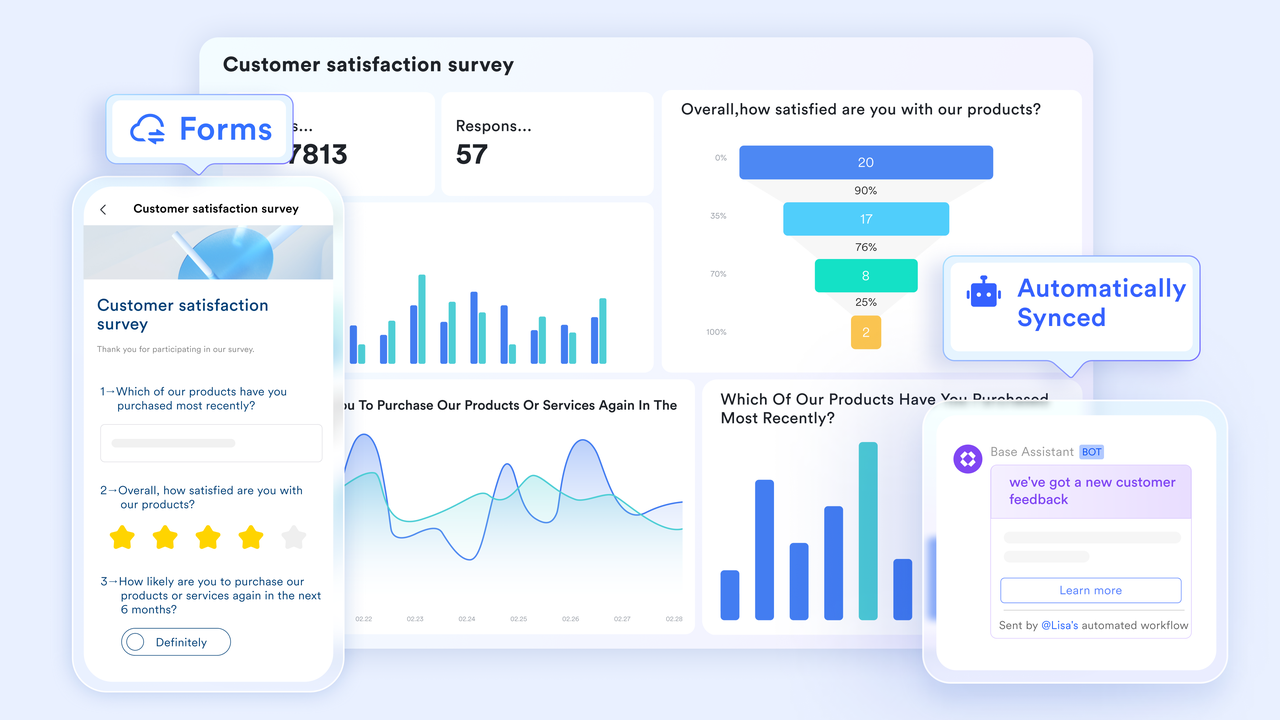
Lark Forms transforms the application intake into a structured process that produces a complete, consistently formatted candidate record the moment a submission arrives. Conditional logic within the application form adapts the questions a candidate sees based on the role they are applying for, so every submission includes the specific information the hiring team needs for that role without requiring a generic catch-all questionnaire. Every submission maps directly into a Lark Base candidate tracking table as a structured record, so the recruiter begins screening from an organized database rather than an inbox. Candidates who submit through a referral can complete the same form via a shared link without a Lark account, ensuring that referral submissions are captured with the same structure as direct applications rather than arriving as informal emails that require manual processing.
A hiring brief that every panel member has actually read with Lark Docs
Panel interviews consistently underperform their potential because the panel members do not share the same understanding of what they are looking for. One interviewer is evaluating technical skills. Another is assessing cultural fit. A third is asking questions from their own experience without a coherent framework for what a strong answer looks like. The debrief that follows produces a set of inconsistent assessments that the hiring manager has to reconcile through intuition rather than evidence, and the decision that results reflects the loudest voice rather than the clearest evaluation criteria.
Lark Docs
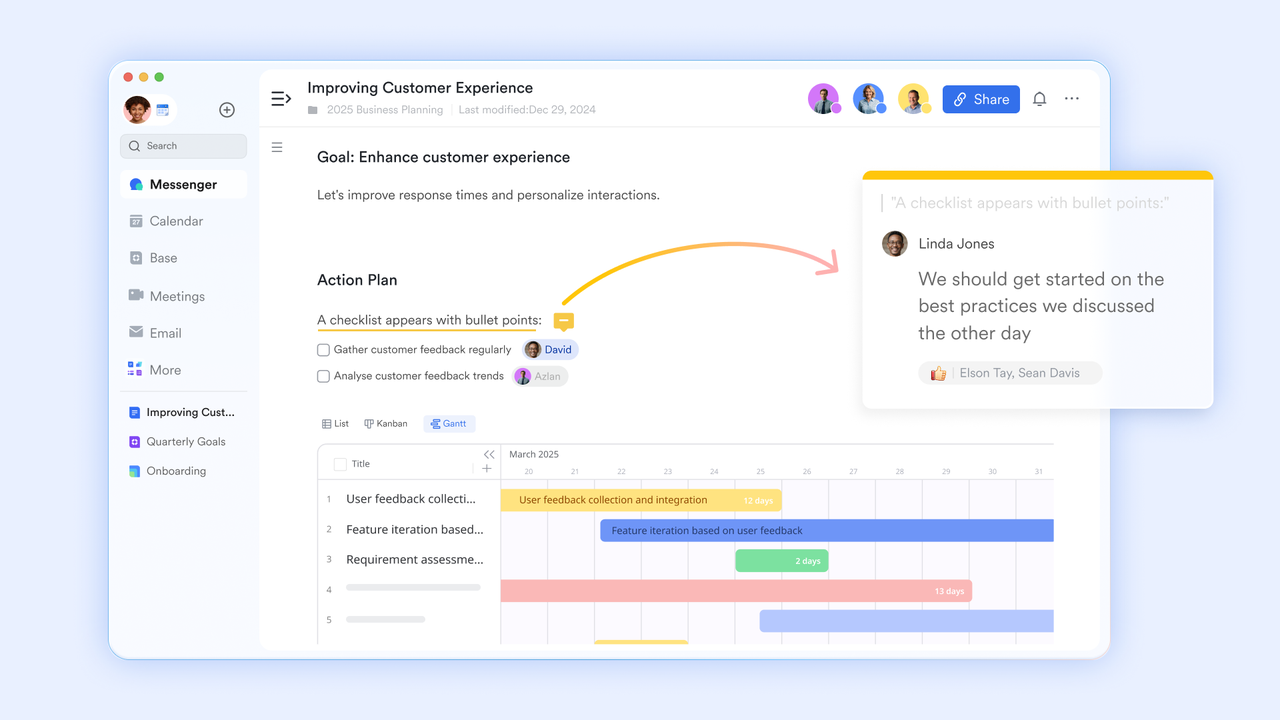
Lark Docs gives every panel member a shared interview brief that contains the role’s success criteria, the specific competencies each interviewer is responsible for assessing, and the candidate’s background in a format that can be reviewed before the interview begins. “Comment” threads allow panel members to flag questions or concerns about the brief before the interview, so alignment is established in the document rather than through an ad hoc pre-meeting. “@mention” assigns specific evaluation responsibilities to each panel member within the brief, so every interviewer arrives knowing exactly what they are there to assess. “Version History” means that when the brief is updated to reflect a refinement in the role requirements, every panel member is reading the current version rather than an earlier draft.
Interview scheduling without the back-and-forth with Lark Calendar
The scheduling gap is one of the most consistent causes of candidate loss in competitive hiring processes. A strong candidate is identified. The recruiter needs to arrange a panel interview. They contact five panel members across two time zones to find a common slot. Two panel members are unavailable. An alternative slot is proposed. One panel member has a conflict. A third round of availability checking begins. Three days have passed. The candidate, who has also been interviewed by two other organizations that move faster, accepts an offer from one of them.
Lark Calendar
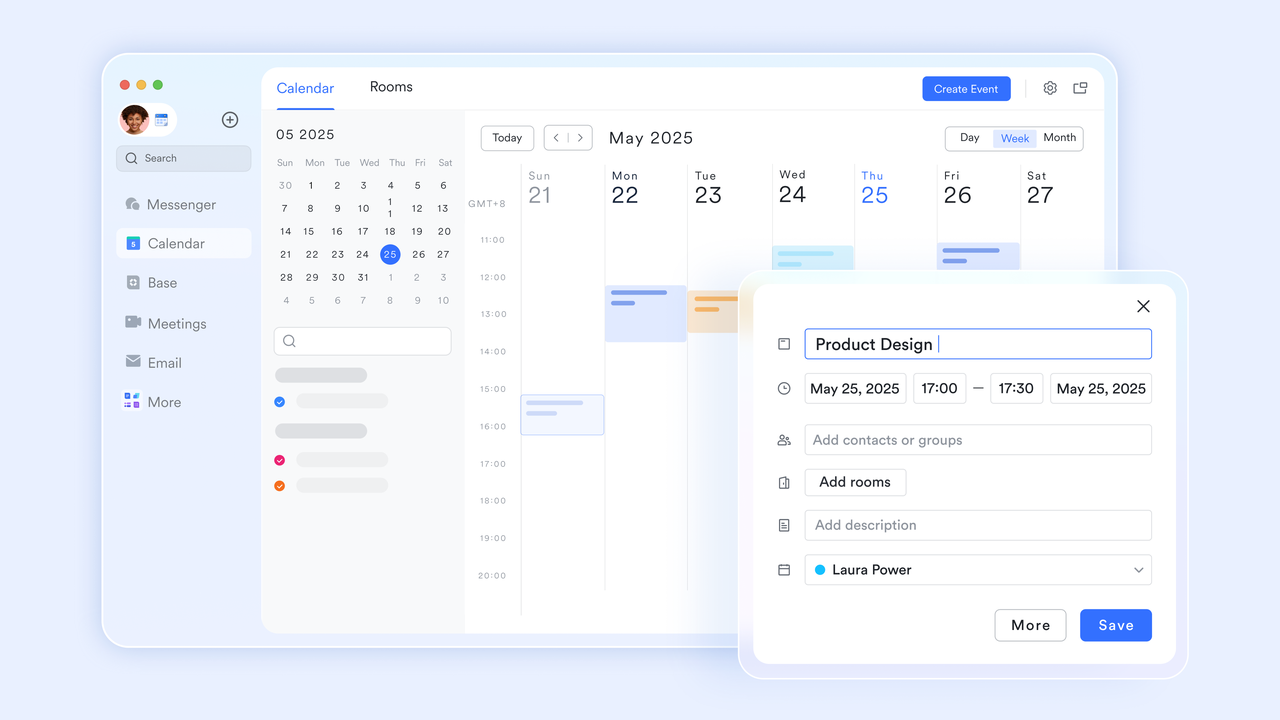
Lark Calendar collapses the scheduling exchange into a single step. “Schedule in Chat” allows the recruiter to compare every panel member’s live availability simultaneously within the conversation where the interview was first proposed and confirm a time without a single scheduling email being sent. “Meeting Groups” automatically creates a linked group chat for the panel that includes the interview brief and the candidate’s profile as a pre-read, so every panel member arrives prepared without anyone having to send a separate preparation email. “Calendar Subscription” allows the recruiting team to maintain a shared interview calendar that every panel member subscribes to, so upcoming interviews are visible to everyone involved without individual calendar invitations being required for each stage.
Offer approvals that do not cost the hire with Lark Approval
An offer that is delayed by three days while it sits in an approval queue is an offer that may never be accepted. The candidate who was genuinely excited about the role on Thursday has had the weekend to reconsider, has received a counter-offer from their current employer, and has started to wonder whether the organization’s slow response is a signal about how decisions get made inside it. Offer approval delays are not just an administrative inconvenience. They are a direct competitive disadvantage in a market where the best candidates have multiple options and make decisions quickly.
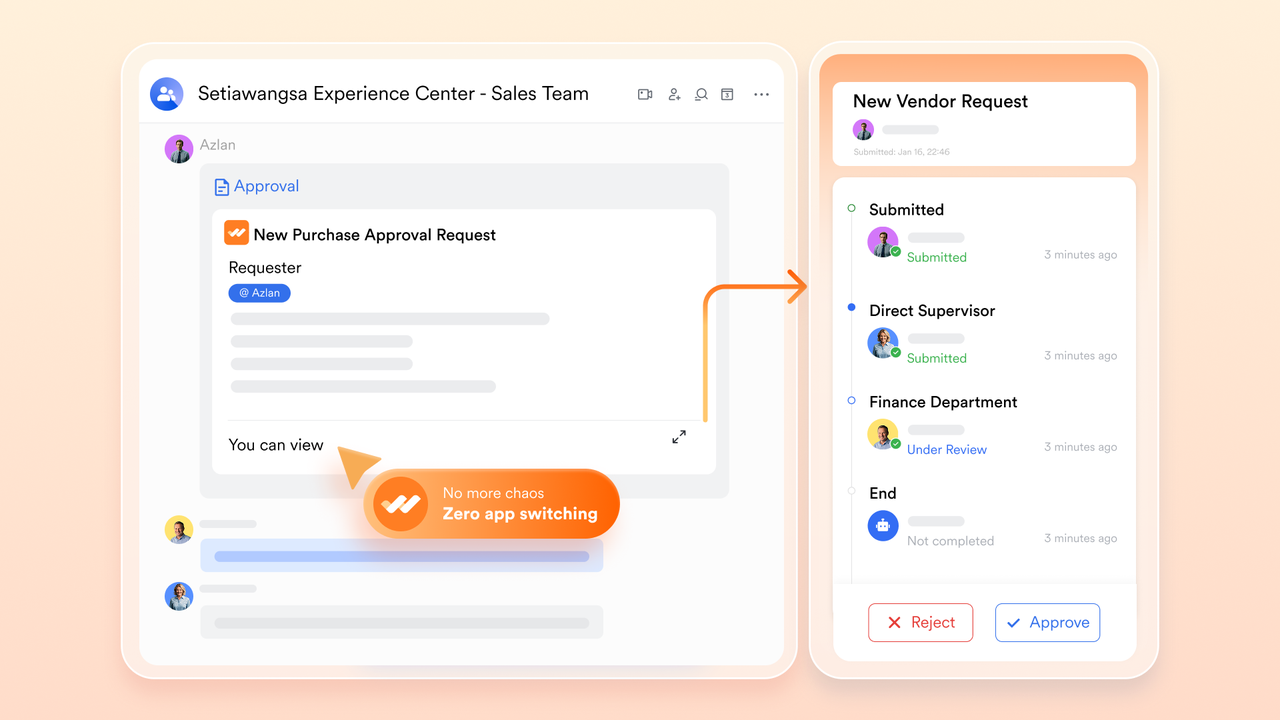
Lark Approval
Lark Approval moves the offer approval process at the speed the hiring situation demands. “Parallel Routing” sends the offer for review to the hiring manager, HR, and finance simultaneously, so the total approval time reflects the pace of the slowest single reviewer rather than the sum of all reviewers waiting in sequence. “Conditional Branches” automatically escalate offers above a defined compensation threshold to the appropriate senior authority without a recruiter having to manually redirect the request. “Approval Notifications” reach approvers wherever they are working, ensuring that a time-sensitive offer does not wait because the relevant approver has not checked their email since the request was submitted.
A pipeline view the whole team can work from with Lark Base
A hiring pipeline that only the recruiter can see is a hiring pipeline that the hiring team cannot optimize. When the hiring manager does not know how many candidates are currently in screening, when the last panel interview was, or why three candidates withdrew in the same week, they cannot make informed decisions about whether to adjust the job description, accelerate the process, or expand the sourcing approach. They receive a periodic update from the recruiter and work from that snapshot until the next one arrives, making decisions based on a picture that is always slightly out of date.
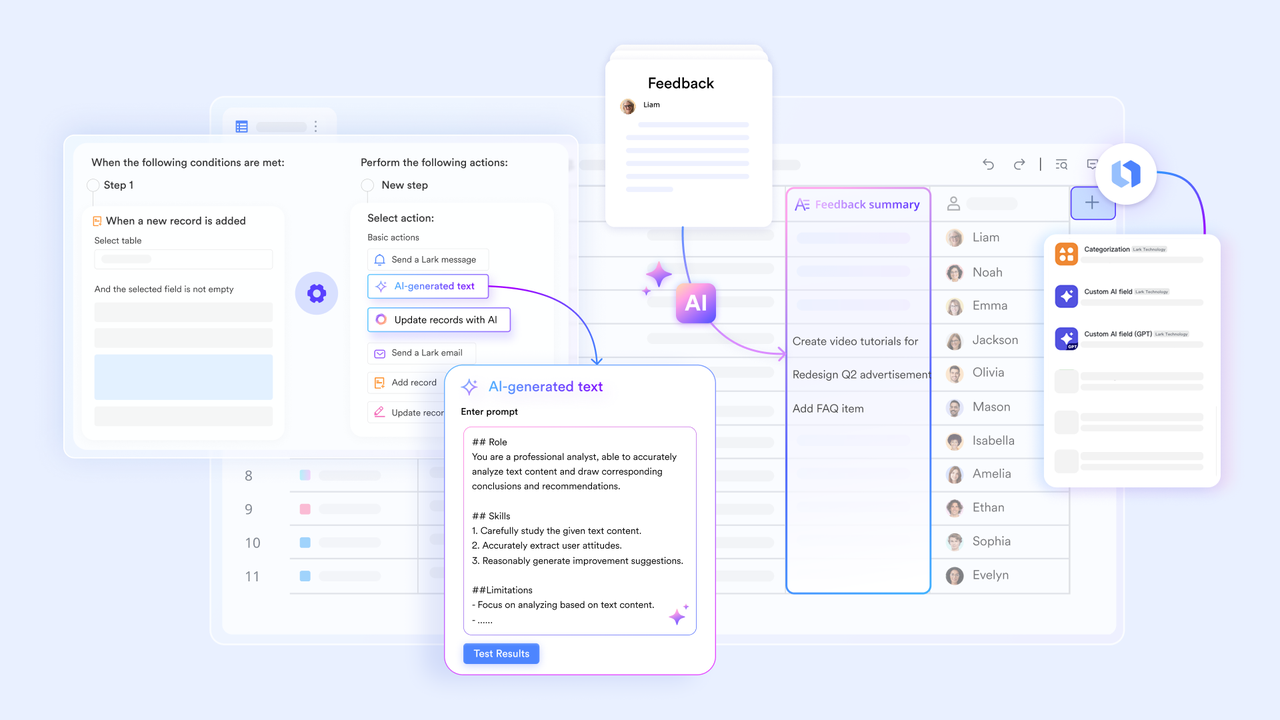
Lark Base
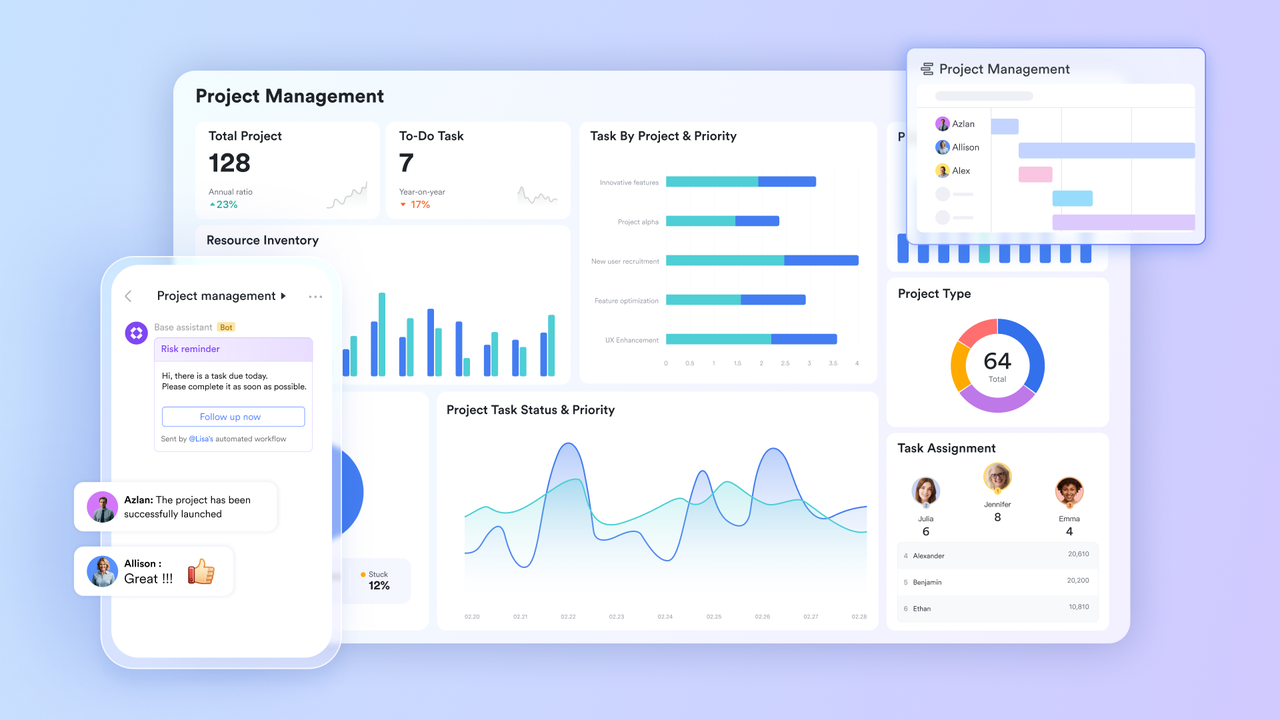
Lark Base gives every member of the hiring team a live view of the pipeline at every stage simultaneously. Kanban view organizes candidates by pipeline stage, so the hiring manager can see at a glance how many candidates are in screening, how many are in panel review, and how many offers are pending without asking the recruiter for a status update. “People fields” name the interviewer responsible for each candidate’s current stage, so every panel member can see their own review obligations alongside the full pipeline picture. Automation workflows trigger notifications when a candidate reaches a new stage, when a scheduled interview has not been confirmed by the day before, or when an offer has been outstanding for longer than a defined threshold, so the team is alerted to pipeline health issues proactively rather than discovering them in a weekly review.
Bonus: Why hiring coordination fails in fast-growing organizations
The standard hiring coordination stack in fast-growing companies combines an ATS like Greenhouse or Lever for candidate tracking, Google Calendar for interview scheduling, Slack for recruiter-to-panel communication, and email for offer management. Each tool handles its specific function adequately and creates its own coordination overhead at every boundary between tools.
The recruiter who has to manually copy candidate information from the ATS into a Slack message, confirm interview times through a separate calendar link, share the interview brief as an email attachment, and chase the offer approval through a separate email thread is managing four coordination tasks that should all happen in one place. Looking at Google Workspace pricing alongside those specialist tools reveals that the per-hire coordination cost in time is often larger than the recruiter’s daily rate for the roles being filled. Lark consolidates the intake, the brief, the scheduling, the approval, and the pipeline view into one environment, so the recruiter spends their time on candidates rather than on coordination.
Hiring at speed without losing quality is not about compressing the evaluation. It is about removing every unnecessary day from the process between identifying a strong candidate and getting an offer in front of them. A connected set of productivity tools that structures the intake, aligns the panel, eliminates the scheduling exchange, accelerates the approval, and keeps the pipeline visible to the whole team simultaneously is how fast-growing organizations fill roles before the best candidates accept offers from someone who moved faster.