
Artificial intelligence is no longer a niche skill reserved for engineers in research labs. By 2026, AI will be embedded in nearly every profession, from marketing and healthcare to manufacturing and education. The real advantage will not come from simply using AI tools, but from understanding how to guide, evaluate, and integrate them responsibly into real-world work.
TL;DR: By 2026, the most valuable AI skills will focus on AI literacy, working with intelligent agents, data thinking, automation, and AI ethics. You do not need to become a machine learning engineer to stay relevant, but you do need to understand how AI systems think, fail, and improve. Start now by learning fundamentals, experimenting with tools, and building small, real projects. The earlier you begin, the easier it will be to adapt.
The Shift From “Using AI” to “Working With AI”
In the early 2020s, learning AI often meant memorizing prompts or figuring out which button to click in a chatbot. By 2026, that mindset will be outdated. AI systems are becoming more autonomous, more multimodal, and more embedded in workflows. The key skill is collaboration: knowing how to ask good questions, set constraints, and verify outputs.
This shift affects almost every role. Designers work with generative image systems, managers delegate tasks to AI agents, and analysts rely on models to surface patterns they might otherwise miss.
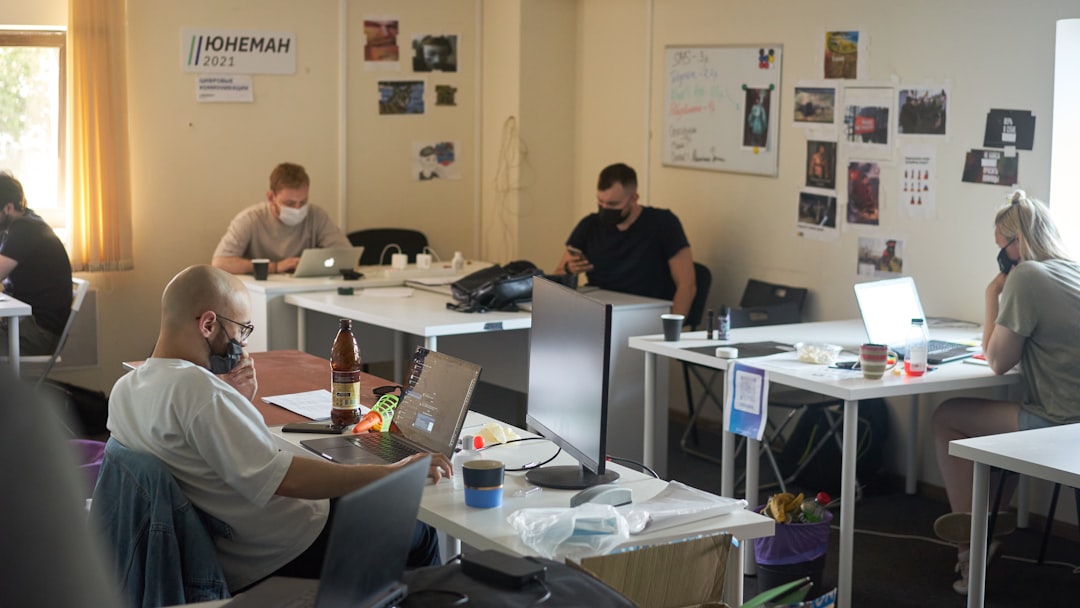
- AI is becoming a teammate, not just a tool.
- Judgment and oversight are as important as technical knowledge.
- Creativity and strategy gain value when paired with AI execution.
Core AI Skills You’ll Need by 2026
1. AI Literacy and Critical Understanding
AI literacy means understanding what AI can do, what it cannot do, and why. You do not need advanced math, but you should understand concepts like training data, model bias, hallucinations, and confidence scores.
By 2026, employers will assume basic AI literacy the same way they assume basic computer literacy today.
- How large models are trained
- Why AI makes mistakes
- When not to trust AI output
2. Prompting and Instruction Design (Beyond Basics)
Prompt engineering is evolving into instruction design. Instead of one-off prompts, professionals will design structured instructions, system guidelines, and feedback loops that AI can follow consistently.
This includes setting tone, defining success criteria, and guiding step-by-step reasoning.
How to start: Practice rewriting prompts with constraints, examples, and evaluation steps. Treat prompts like mini-specifications, not questions.
3. Working With AI Agents and Automation
AI agents that can plan, act, and monitor tasks are becoming mainstream. Knowing how to deploy and oversee them will be a major advantage.
- Breaking work into tasks AI can handle
- Designing human-in-the-loop checkpoints
- Monitoring performance and errors
Even non-technical professionals will be expected to manage automated workflows, not just use static tools.
4. Data Thinking (Not Data Science)
You may not need to build models, but you must understand data. AI is only as good as the information it receives. Data thinking means knowing how data is collected, cleaned, labeled, and interpreted.
This skill is especially important when evaluating AI output and avoiding misleading conclusions.
- Recognizing biased or incomplete data
- Asking better data-related questions
- Connecting insights to business or human outcomes
5. Model Customization and Fine-Tuning Awareness
By 2026, more teams will customize models using internal data. You may not fine-tune models yourself, but you should understand the process and its limitations.
This knowledge helps you collaborate with technical teams and avoid unrealistic expectations of AI systems.
Key idea: Customization improves relevance, not perfection.
6. Multimodal AI Skills
AI is no longer text-only. Images, audio, video, and structured data are all part of modern AI systems. Knowing how to combine these inputs is becoming a valuable skill.
Image not found in postmeta- Using text with visual references
- Analyzing audio or video with AI tools
- Combining formats for richer outputs
7. Ethical AI and Risk Awareness
As AI becomes more powerful, ethical awareness becomes non-negotiable. By 2026, understanding AI ethics will be a career requirement, not a bonus skill.
This includes privacy, consent, bias, and accountability.
- Knowing when AI use is inappropriate
- Spotting harmful or biased outputs
- Communicating AI limitations clearly
How to Start Learning These Skills Today
Start Small and Practical
Do not try to “learn AI” all at once. Pick one area and apply it to your current work. Small experiments build intuition faster than theory alone.
- Automate a repetitive task
- Improve a document using AI feedback
- Analyze a dataset relevant to your field
Use AI as a Learning Partner
One of the most powerful ways to learn AI is to learn with AI. Ask it to explain concepts, critique your work, or simulate scenarios.
Tip: Always verify important information using trusted external sources.
Build a “Human-in-the-Loop” Habit
Practice reviewing, editing, and improving AI output rather than accepting it as final. This habit prepares you for real-world usage where oversight matters.
Think of yourself as the editor, not the typist.
Follow Real-World Use Cases
Courses and tutorials are useful, but real value comes from seeing how AI is applied in the wild. Follow case studies, industry blogs, and product updates.
- Healthcare AI for diagnostics
- Marketing automation with AI
- AI copilots in software development
The Skills That Will Matter Most
By 2026, technical ability alone will not set you apart. The most successful professionals will combine AI knowledge with human strengths like judgment, empathy, creativity, and responsibility.
AI will reward those who can:
- Ask better questions
- Interpret results thoughtfully
- Balance speed with accuracy and ethics
Learning AI is no longer about chasing trends. It is about building a durable skillset that grows alongside the technology. Start today, stay curious, and treat AI not as a shortcut, but as a powerful collaborator.