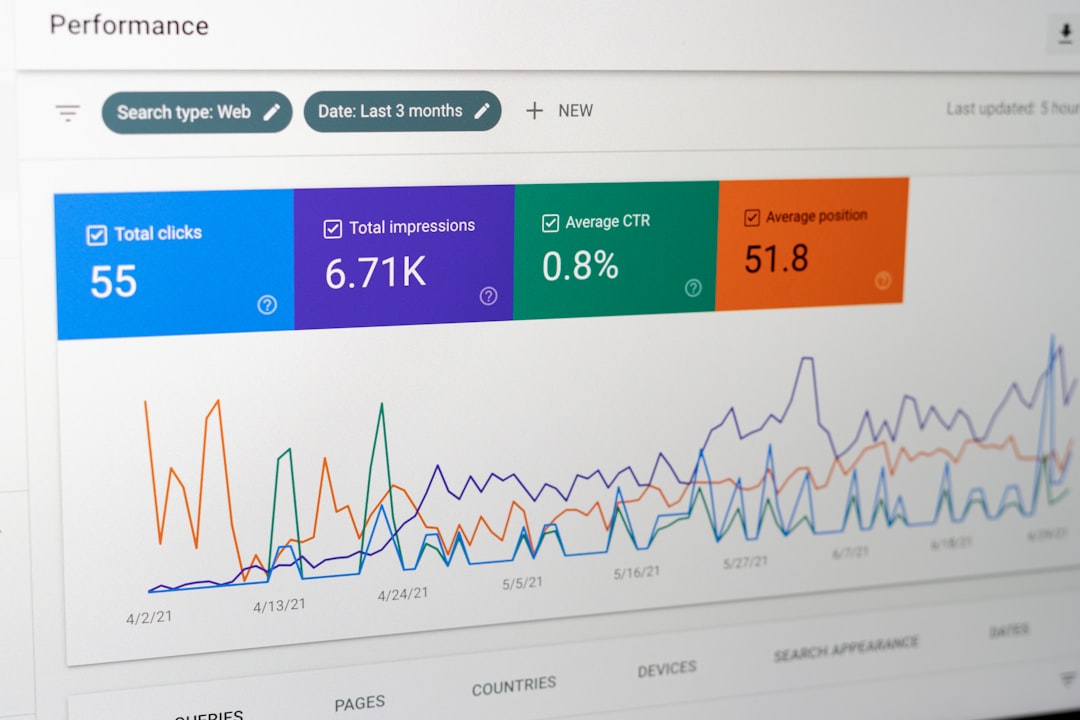
Modern marketing agencies operate in an environment where performance must be measured precisely, across multiple channels, in real time. Paid media, organic search, email campaigns, social platforms, affiliate traffic, and offline conversions all generate vast amounts of data. Without structured dashboards, data becomes noise rather than insight. To remain competitive, agencies rely on robust analytics dashboards that unify data, reveal trends, and guide decision-making with clarity and accountability.
TLDR: Agencies depend on specialized analytics dashboards to monitor cross-channel performance, optimize campaigns, and report measurable results. The most effective dashboards unify data sources, provide real-time insights, and highlight actionable metrics rather than vanity statistics. This article explores eight of the most trusted analytics dashboards agencies use today, explaining why they matter and how they drive performance optimization.
Below are eight of the most reliable and widely used analytics dashboards agencies trust to track performance across digital channels.
1. Google Analytics 4 (GA4)
Google Analytics 4 remains a foundational tool for agencies worldwide. As a cross-platform analytics solution, GA4 focuses on event-based tracking, enabling deeper insights into user behavior across websites and mobile apps.
Why agencies use it:
- Cross-device and cross-platform tracking
- Detailed event measurement
- Built-in predictive metrics
- Strong integration with Google Ads
GA4’s strength lies in its adaptability. Agencies can configure custom events and conversions to match each client’s specific objectives. Enhanced ecommerce reporting, attribution modeling, and audience segmentation help teams understand how marketing efforts contribute to revenue.

While GA4 does require a learning curve, its flexibility and integration ecosystem make it indispensable for serious performance monitoring.
2. Google Looker Studio
Raw data alone is rarely sufficient for decision-making or client communication. Google Looker Studio (formerly Data Studio) allows agencies to transform complex datasets into clear, customizable dashboards.
Key advantages include:
- Multi-source data blending
- Real-time reporting
- Interactive visualizations
- Client-friendly dashboard sharing
Agencies often consolidate GA4, Google Ads, Search Console, YouTube Analytics, CRM data, and third-party platforms into a unified Looker Studio dashboard. This centralized reporting reduces fragmentation and ensures consistent metrics across channels.
Because presentation matters just as much as analysis, Looker Studio serves both analysts and account managers. It converts performance tracking into storytelling backed by data.
3. HubSpot Analytics Dashboard
For agencies working heavily in inbound marketing and CRM-driven campaigns, HubSpot provides a comprehensive analytics environment. Its dashboards integrate marketing, sales, and service data into one system.
What makes HubSpot powerful:
- End-to-end funnel tracking
- Revenue attribution reporting
- Email and campaign performance analysis
- CRM pipeline visibility
Unlike purely traffic-focused platforms, HubSpot closes the loop between marketing activity and actual sales outcomes. Agencies can demonstrate how blog content, landing pages, paid campaigns, and nurturing workflows influence pipeline growth and revenue generation.
This revenue-centric view strengthens client relationships by linking marketing spend directly to business impact.
4. Tableau
Tableau is widely recognized as a premium data visualization and business intelligence platform. Larger agencies and enterprise clients frequently rely on Tableau to analyze high volumes of multi-channel data.
Benefits include:
- Advanced data modeling capabilities
- Integration with numerous databases
- Highly customizable visual dashboards
- Deep analytical functions
Tableau excels when agencies manage complex datasets across multiple countries, brands, or media channels. Its flexibility allows teams to dig deeper into patterns, correlations, and anomalies.

While it requires advanced expertise, Tableau transforms scattered information into precise strategic insight. For agencies handling enterprise-level reporting, it is often a preferred solution.
5. Power BI
Microsoft Power BI is another robust business intelligence platform commonly used by agencies that operate within Microsoft ecosystems.
Why agencies choose Power BI:
- Strong integration with Excel and Azure
- Scalable enterprise capabilities
- Custom KPI tracking
- Automated data refresh scheduling
Power BI is particularly useful for agencies that manage performance data alongside financial metrics, operational data, and forecasting models. It enables cross-functional visibility, connecting marketing performance with cost management and profitability analysis.
For agencies focused on rigorous financial accountability, Power BI provides the necessary analytical depth.
6. SEMrush My Reports Dashboard
SEO and paid search campaigns require specialized tracking dashboards. SEMrush offers My Reports, a customizable reporting tool tailored for digital marketing agencies.
Core features:
- Keyword ranking tracking
- Backlink analysis
- Competitor benchmarking
- Organic and paid performance reports
Agencies can automate branded reports combining SEO, PPC, and competitive research into one dashboard. This eliminates manual export processes and reduces reporting time significantly.
By offering competitor visibility alongside client progress, SEMrush dashboards help agencies position performance within broader market context — a critical element in search marketing.
7. AgencyAnalytics
AgencyAnalytics is purpose-built for marketing agencies. It consolidates various marketing platforms into simplified, white-labeled dashboards designed specifically for client reporting.
Notable capabilities:
- Integration with 70+ marketing platforms
- Automated client reporting
- Custom white-label dashboards
- Goal tracking and alerts
Because it focuses exclusively on agency needs, AgencyAnalytics reduces the complexity associated with more technical BI tools. It allows account managers to quickly view KPIs such as cost per acquisition, conversion rates, traffic sources, and engagement metrics across all active channels.

For mid-sized agencies looking to streamline reporting without building custom dashboards from scratch, it offers an efficient and reliable solution.
8. Supermetrics Dashboard Integrations
Supermetrics is not a dashboard itself but a powerful data connector that integrates multiple marketing data sources into platforms like Google Sheets, Looker Studio, Excel, and Power BI.
Why it matters:
- Automated data extraction
- Cross-channel integration
- API-based reliability
- Reduced manual reporting hours
Agencies managing Facebook Ads, LinkedIn Campaigns, TikTok Ads, Google Ads, and multiple analytics platforms often face fragmentation issues. Supermetrics consolidates this data into centralized reporting systems, eliminating discrepancies caused by manual exports or inconsistent attribution windows.
Its automation capabilities improve efficiency while ensuring data consistency — a cornerstone of trustworthy reporting.
What Makes an Analytics Dashboard Effective?
While the tools above differ in complexity and specialization, highly effective dashboards share several characteristics:
- Clarity over clutter: Focus on actionable KPIs.
- Real-time or near-real-time updates: Timely insights drive competitive advantage.
- Cross-channel integration: Unified views prevent siloed decision-making.
- Customizability: Every client or campaign has unique objectives.
- Automation: Reduced manual errors increase trustworthiness.
Agencies that rely solely on isolated metrics risk misinterpretation. A spike in traffic without conversion growth may indicate quality issues. Rising ad spend without improved return on ad spend (ROAS) may signal targeting inefficiencies. Integrated dashboards help surface these relationships clearly.
Conclusion
Monitoring performance across channels is no longer optional for agencies — it is foundational to survival in a data-driven marketplace. From GA4’s event-level insights to Tableau’s advanced analytics and AgencyAnalytics’ streamlined reporting, each dashboard serves a strategic role.
The most successful agencies do not merely collect data. They transform it into insight, strategy, and measurable results. By selecting the right combination of analytics dashboards, agencies ensure transparency, optimize campaigns continually, and demonstrate undeniable value to clients.
In an increasingly competitive digital environment, a well-structured analytics dashboard is more than a reporting tool. It is a strategic asset that defines how effectively an agency can plan, adapt, and grow.