Turning an idea into a physical object used to be slow, expensive, and full of guesswork. Engineers, designers, inventors, and product teams often had to wait weeks for machined samples or handmade models before they could test a concept. 3D printer rapid prototyping has changed that dramatically. By building parts layer by layer from digital files, it allows teams to move from concept to testable object in hours or days instead of weeks.
TLDR: 3D printer rapid prototyping is the process of quickly creating physical models, parts, or product samples using additive manufacturing. It helps teams test ideas faster, reduce development costs, improve designs, and catch problems early. The process typically moves from digital design to slicing, printing, post-processing, and testing. It is widely used in product design, engineering, healthcare, architecture, education, automotive development, and many other fields.
What Is 3D Printer Rapid Prototyping?
3D printer rapid prototyping is a manufacturing method used to create quick physical versions of digital designs. Instead of cutting material away from a block, as in traditional machining, a 3D printer builds an object additively, meaning one thin layer at a time. This makes it possible to produce complex shapes, internal structures, curved surfaces, and customized parts with impressive speed.
In simple terms, rapid prototyping helps answer a crucial question: Will this idea work in the real world? A prototype may be a rough visual model, a functional mechanical part, a fit-check component, or a polished presentation sample. The goal is not always to create the final product immediately. More often, the goal is to learn quickly, improve the design, and move forward with more confidence.

Why Rapid Prototyping Matters
Product development is full of uncertainty. A design may look perfect on a screen but fail when held, assembled, stressed, or used by real people. Rapid prototyping reduces that uncertainty by making experimentation faster and more affordable.
For example, a team designing a new handheld device can print several versions of the casing to compare grip comfort, button placement, wall thickness, and internal component fit. Instead of debating design choices only through drawings or renders, they can physically hold each version and make decisions based on evidence.
This ability to test early and often is one of the main reasons 3D printing has become such an important tool in modern design and engineering.
Key Benefits of 3D Printer Rapid Prototyping
- Speed: A prototype can often be produced in a few hours, allowing design teams to test and revise ideas quickly.
- Lower costs: Traditional prototypes may require molds, tooling, or outsourced machining. 3D printing reduces many of these upfront expenses.
- Design flexibility: Designers can make changes to a digital file and print a new version without rebuilding an entire production setup.
- Improved communication: Physical models help clients, investors, engineers, and manufacturers understand a concept more clearly than drawings alone.
- Early problem detection: Fit issues, weak points, ergonomic problems, and assembly conflicts can be discovered before mass production.
- Customization: Each printed part can be unique, making the process ideal for personalized products, medical devices, and specialized components.
Perhaps the biggest advantage is iteration. A single prototype is useful, but a series of prototypes is powerful. Each version teaches something new. Over time, these small improvements can lead to a much stronger final product.
How the Rapid Prototyping Process Works
Although every project is different, most 3D printing rapid prototyping workflows follow a similar sequence. The process begins with an idea and ends with a printed object that can be evaluated, improved, and sometimes used directly.
- Concept and requirements: The team defines what the prototype should do. Is it for appearance, testing, assembly, strength, ergonomics, or presentation?
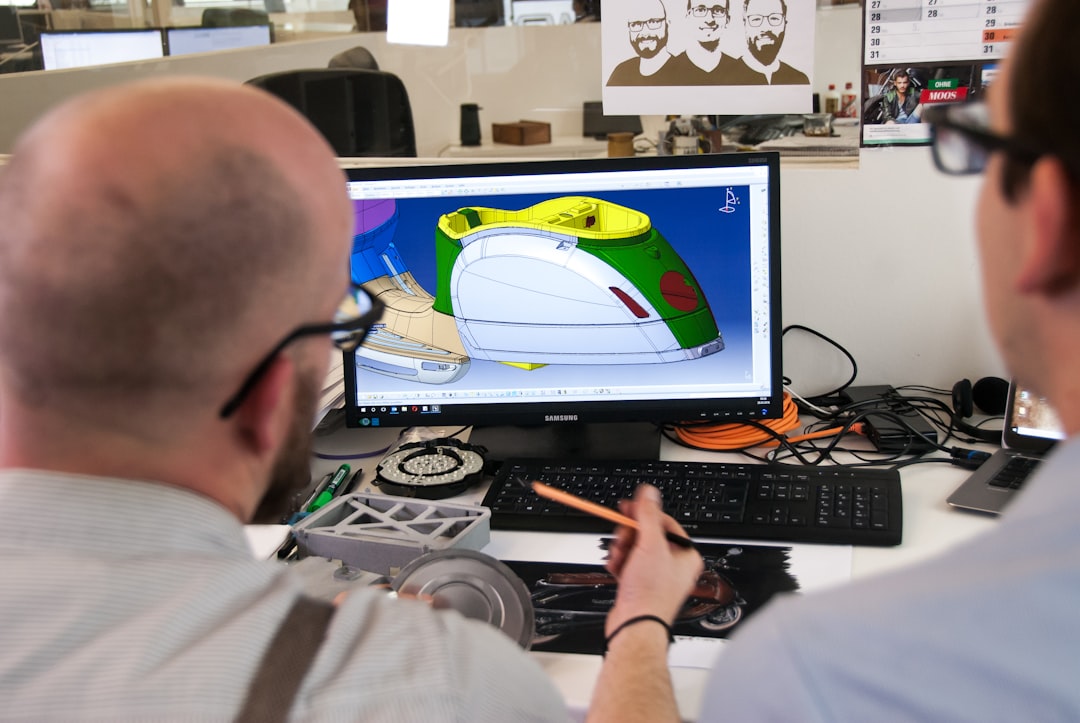
- 3D modeling: A digital model is created using computer-aided design software. This model contains the geometry of the part.
- File preparation: The model is usually exported as an STL, OBJ, or 3MF file and checked for errors such as holes, non-manifold edges, or incorrect scale.
- Slicing: Slicing software converts the model into printer instructions. It determines layer height, infill, supports, print speed, and toolpath.
- Printing: The printer builds the part layer by layer using plastic, resin, powder, metal, or another material depending on the technology used.
- Post-processing: Supports may be removed, surfaces may be sanded, parts may be cured, dyed, painted, polished, or assembled.
- Testing and evaluation: The prototype is inspected and tested. Feedback is used to refine the next version.
Common 3D Printing Technologies Used for Prototyping
Different 3D printing technologies serve different purposes. Choosing the right one depends on the prototype’s required accuracy, strength, surface finish, material, and budget.
FDM, or fused deposition modeling, is one of the most common methods. It uses a heated nozzle to extrude thermoplastic filament, such as PLA, ABS, PETG, or nylon. FDM is affordable, accessible, and excellent for early concept models, jigs, fixtures, and basic functional prototypes.
SLA, or stereolithography, uses a laser or light source to cure liquid resin into solid layers. It produces smooth surfaces and fine details, making it ideal for visual models, dental parts, jewelry prototypes, and small precise components.
SLS, or selective laser sintering, uses a laser to fuse powdered material, commonly nylon. It can produce strong, functional parts without many support structures, making it useful for complex geometries, hinges, housings, and end-use testing.
Metal 3D printing technologies, such as direct metal laser sintering, are used for advanced prototypes in aerospace, automotive, medical, and industrial applications. These systems are more expensive but can create durable, high-performance parts from metals like titanium, stainless steel, and aluminum.
Materials Used in Rapid Prototyping
Material choice has a major impact on how a prototype looks, feels, and performs. A simple shape model may only need inexpensive PLA, while a functional prototype might require impact resistance, heat tolerance, flexibility, or chemical resistance.
- PLA: Easy to print, affordable, and good for visual models and early concepts.
- ABS: Tougher and more heat resistant, often used for functional prototypes.
- PETG: Durable, slightly flexible, and resistant to moisture and chemicals.
- Nylon: Strong, wear resistant, and useful for mechanical components.
- TPU: Flexible and rubber-like, suitable for grips, seals, bumpers, and wearable parts.
- Resins: Available in standard, tough, flexible, castable, biocompatible, and high-detail formulations.
- Metals: Used when prototypes must withstand demanding mechanical or thermal conditions.
The best material is not always the strongest or most expensive. It is the one that matches the purpose of the prototype. A display model and a load-bearing bracket have very different requirements.
Applications Across Industries
3D printer rapid prototyping is used in a remarkably wide range of industries because nearly every field benefits from faster experimentation.
Product design teams use it to test form, fit, function, and usability. Consumer electronics, kitchen tools, toys, packaging, sporting goods, and household products can all be refined through printed prototypes.
Engineering and manufacturing teams use 3D printing for fixtures, assembly aids, test components, tooling prototypes, and low-volume production parts. In many factories, printed jigs and guides help workers assemble products more accurately and efficiently.
Healthcare professionals use rapid prototyping for surgical planning models, dental aligners, prosthetic sockets, orthotic devices, anatomical models, and custom medical tools. The ability to personalize each object is especially valuable in medicine.
Architecture and construction use printed models to communicate building concepts, site layouts, structural forms, and interior plans. A physical model can reveal spatial relationships that are difficult to understand from flat drawings.
Automotive and aerospace companies use prototypes to test aerodynamics, ducts, brackets, housings, dashboard components, and lightweight structures. These industries value 3D printing because it supports both complex geometry and fast design cycles.
Challenges and Limitations
Despite its many advantages, 3D printer rapid prototyping is not perfect. Printed parts may have visible layer lines, limited material properties, size restrictions, or lower strength compared with traditionally manufactured parts. Some processes require support removal, curing, sanding, or other post-processing steps that add time.
Accuracy also depends on printer quality, calibration, material behavior, and design settings. A prototype that looks good may still need dimensional adjustments before it fits properly with other components. For high-performance applications, printed material properties must be understood carefully, especially when parts will carry loads, face heat, or experience repeated stress.
Another important point is that 3D printing is not always the best method for large-scale production. It excels at prototypes, custom parts, low-volume production, and complex geometries, but injection molding, casting, stamping, or machining may be more economical for thousands or millions of identical parts.
Best Practices for Better Prototypes
- Define the prototype’s purpose: Know whether you are testing appearance, fit, strength, usability, or manufacturability.
- Start simple: Early prototypes do not need to be perfect. Quick rough models can answer big questions fast.
- Design for the printing process: Consider wall thickness, overhangs, tolerances, orientation, and supports.
- Use the right material: Match material properties to the test you plan to perform.
- Document each version: Track what changed, what worked, and what failed.
- Test realistically: Whenever possible, expose prototypes to real handling, assembly conditions, and operating environments.
Good rapid prototyping is not just about printing quickly. It is about learning quickly. The most successful teams treat each print as part of a structured design conversation.
The Future of Rapid Prototyping
As printers become faster, materials become stronger, and digital workflows become easier, the line between prototype and final product continues to blur. More companies are using 3D printing not only to test designs but also to produce custom end-use parts, replacement components, and small production runs.
Advances in multi-material printing, automated post-processing, artificial intelligence-driven design, and faster industrial systems will make rapid prototyping even more powerful. Designers will be able to create smarter structures, lighter components, and highly personalized products with less waste and shorter development timelines.
Ultimately, 3D printer rapid prototyping is more than a manufacturing technique. It is a way of thinking: build, test, learn, improve, and repeat. For anyone developing a product, solving a technical problem, or bringing a creative idea to life, it offers a practical bridge between imagination and reality.